
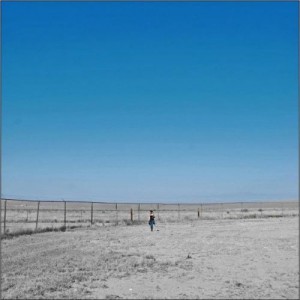
Joanne Lefrak is currently the Director of Experience and Social Impact at Ghost Ranch in Abiquiu, NM. She is the Director of the Ruth Hall Museum of Paleontology and the Florence Hawley Ellis Museum of Anthropology and she oversees programs, outdoor adventures, and tours. She is an educator, visual artist, and curator based in Santa Fe, NM. She spent 19 years at SITE Santa Fe, a contemporary art museum, 12 of those as Director of Education and Curator of Public Practice. While there, Joanne Lefrak curated all public programs and performance art for the institution and worked with artists to co-create commissions enacted within the community and expanding arts education throughout New Mexico. She lectures extensively on museum education and was a fellow as part of MCA Denver’s Animating Museums Creative Leadership program, funded by the Andrew W. Mellon Foundation.
From 2011- 2021, Lefrak volunteered as the Chair for the City of Santa Fe Children and Youth Commission and has worked to improve the lives of children by supporting local non profit and school programs that work for youth. She is one of the founding members of the Santa Fe Community Educators Network which is committed to the power of collaboration and collective impact to successfully address community needs by creating and sharing resources across the non-profit sector. She is the recipient of the City of Santa Fe Mayor’s Award for Excellence in the Arts in 2014.
As a visual artist, her work has been exhibited at venues such as MASS MoCA, ev+a in Ireland, ArtAspen, Art Miami, the Albuquerque Museum, and the New Mexico Museum of Art and her artwork has been reviewed in Art in America, Huffington Post, The Boston Globe, Art ltd., CIRCA Art Magazine, AdobeAirstream, and the Santa Fean.
Joanne Lefrak was born in Long Branch, NJ and received her BS from Skidmore College, Saratoga Springs, NY in 1999 and her MFA from Montclair State University in 2001.
“I have been scratching drawings into Plexiglas. When the piece is illuminated, the shadows cast by the scratches make the image visible. Lines incised into the Plexiglas are barely apparent, and the silhouettes they create are intangible; however the shadow’s gradations of gray convey depth and space in almost photographic detail.
While my practice has focused on landscapes, I have been recently drawing full scale portraits of women in Plexiglas. The pieces of Plexiglas are six feet by three feet and the model is represented at full scale. Due to the technique, the portraits appear ghostly yet the presence of the person who is depicted is palpable. I find that I cannot help but think of the ephemerality of human existence since the portrait conveys the energy of a person yet the image is simply a shadow.
Authenticity is primary. The portraits are not idealized and I am unconcerned with social obsessions for youth or perfection. Rather, my subjects are middle-aged women (my colleagues and friends) who are fully empowered and in the prime of their lives. The shadows cast from the scratched renderings define each image, making visible the beauty of persona, age, and the power of the women.”